 JapanMyths
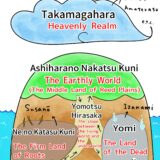
”Kami” is a Japanese word referring to gods, spirits, and sacred presences in Japanese belief. The unit used to count Kami is “Hashira.”
Izanami suffers severe burns!
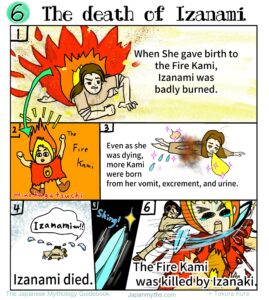
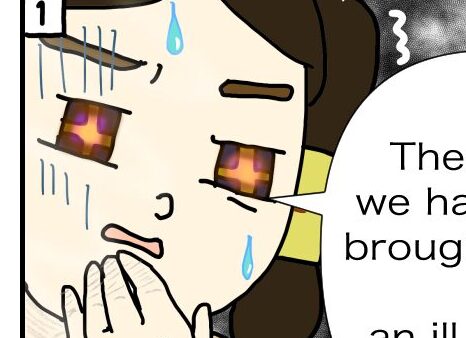
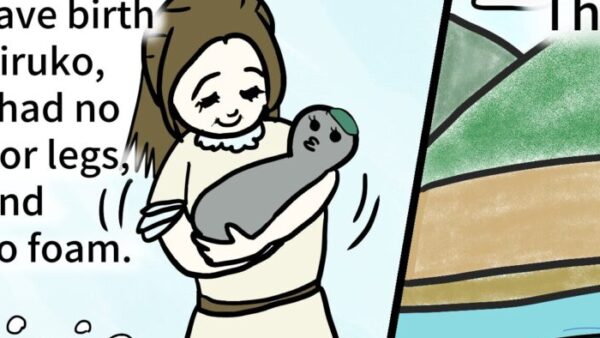
Izanami fell into a critical condition while giving birth.
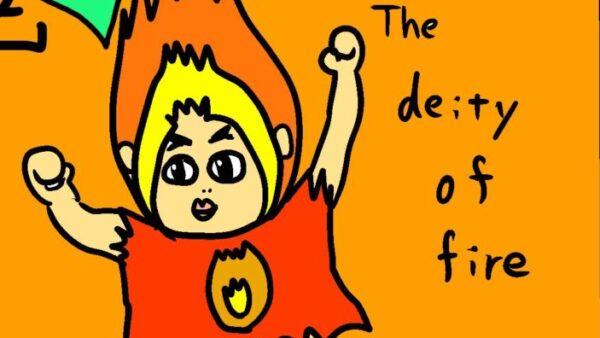
When Izanami gave birth to the fire Kami, Hinokagutsuchi, she suffered severe burns to her lower body and fell into a critical condition.
Even on the verge of death, she continued to give birth to Kami.
Kami were also born from Izanami’s vomit, excrement, and urine.
Were you surprised that Kami could be born from such places?!
Yes — in Japan, countless Kami were born in many different ways and from all kinds of places.
You don’t have to memorize them all. The important points are highlighted in the manga, so just relax and enjoy reading!
Even tears can become Kami.
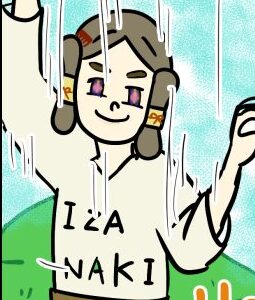
Even the tears shed by Izanaki became Kami.
Totsuka no Tsurugi (sword)
Izanaki’s grief over Izanami’s death turned into anger toward the Fire Kami.
In his rage, Izanaki killed the Fire Kami by cutting off his head with a sword.
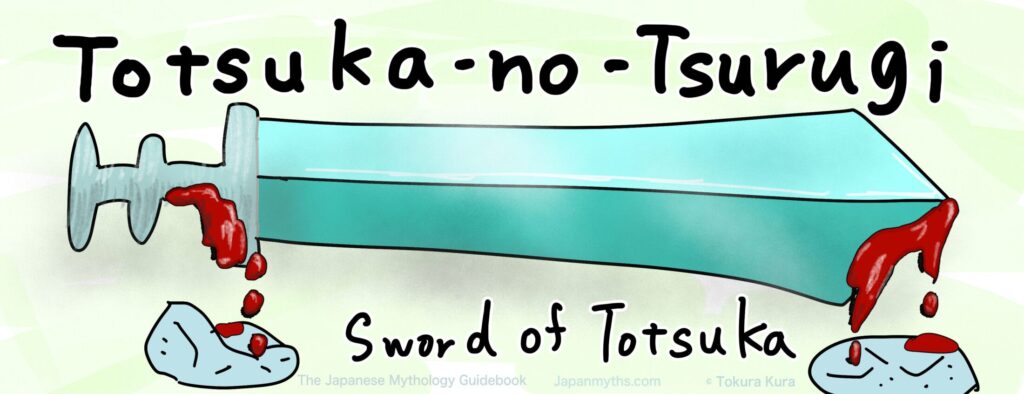
The sword that Izanaki used to cut off the head of the Fire Kami is called the Totsuka no Tsurugi, and it, too, is Kami.
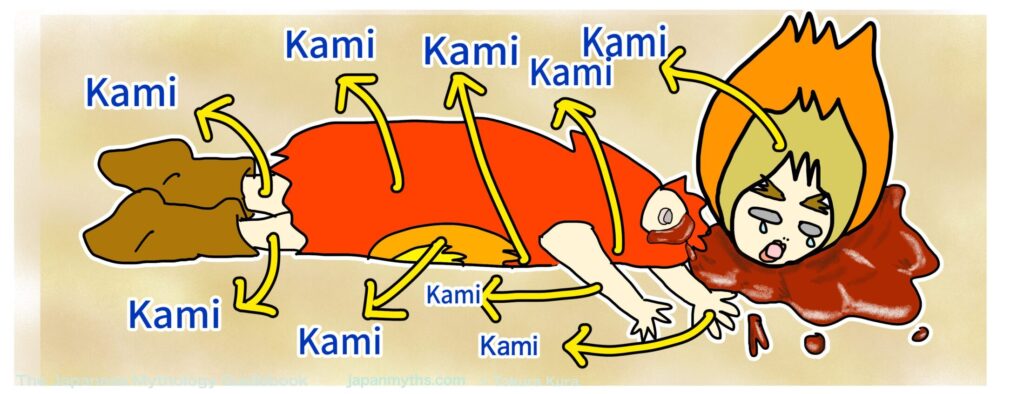
Many Kami were also born from the blood.
Kami were also born from the body of the Fire Kami after his death.
From the body of Hinokagutsuchi, the Mountain Kami were born.
(Japan really has a lot of Kami, dosen’t it? It’s tough to put it all together…)
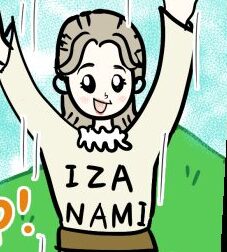
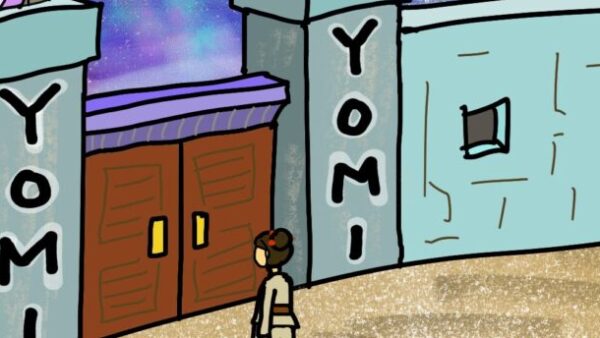
↓ Izanami Episodes
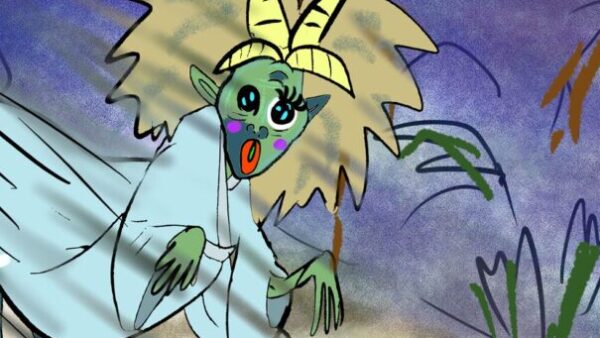
↓ Izanaki Episodes
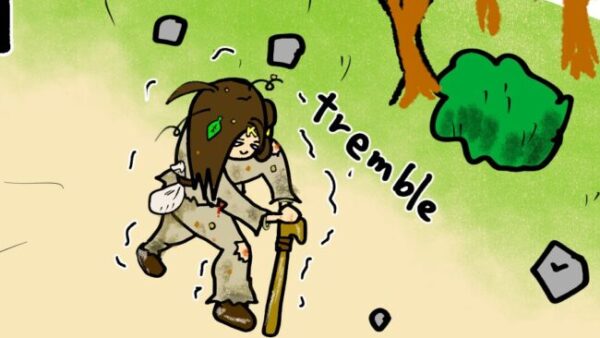
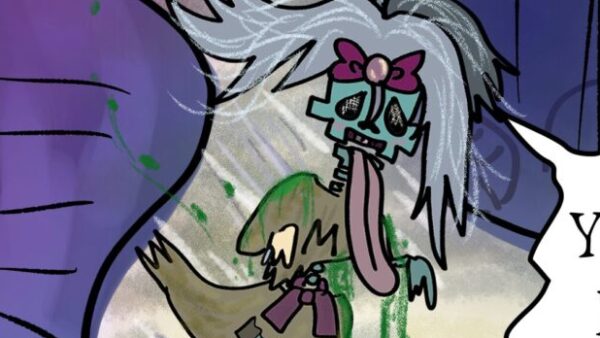
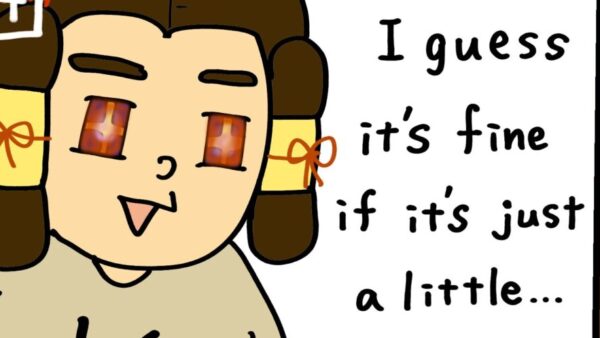
Kami on this site were character-designed and illustrated by Tokura Kura. Since the Kojiki contains no descriptions or illustrations of Kami’s physical appearances, they are depicted based on imagination.
This project does not aim to promote or criticize any specific religion.
It is not intended to serve as an academic, historical, or educational reference.
This site treats mythology as one cultural element among many.
It has no affiliation with any country, government, shrine, or official organization.
The content is part of a personal project by the creator, Tokura, based on knowledge personally accumulated over many years and closely aligned with texts such as the Kojiki, and expressed through an original approach and presentation.
The project places particular emphasis on carefully explaining concepts that may be difficult to understand, especially for readers unfamiliar with Japanese culture.