Read the Japanese Myths of the Kojiki in Manga Form
About This Site
This is a website from Japan that explains Japanese mythology to people around the world in a fun, clear, and structured way.
What Is the Kojiki?
The oldest surviving official history book in Japan, compiled in 712.
The original manuscript no longer exists, and only copied manuscripts designated as National Treasures survive.
There were also historical records older than the Kojiki, but they were lost in a fire.
Q:What is written in the Kojiki?
A:Myths, imperial legends, and history(In 3 Volumes)
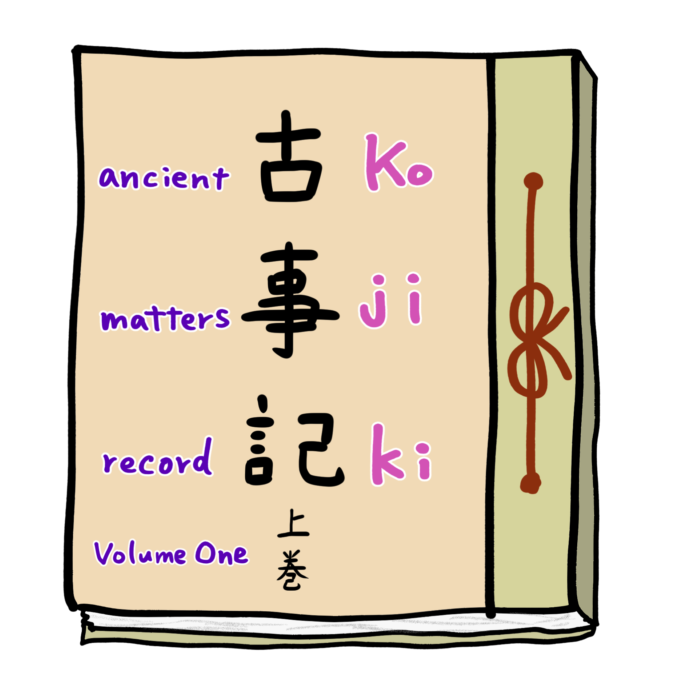
Volume 1
The Stories of the Kami
The origins of Japan, from the beginning of creation to the birth of Emperor Jinmu, the first emperor.
In other words, this is the mythological section.
This is the volume that this site is adapting into manga!
There are other books that also contain myths, but when people speak of Japanese mythology, they generally mean the first volume of the Kojiki.
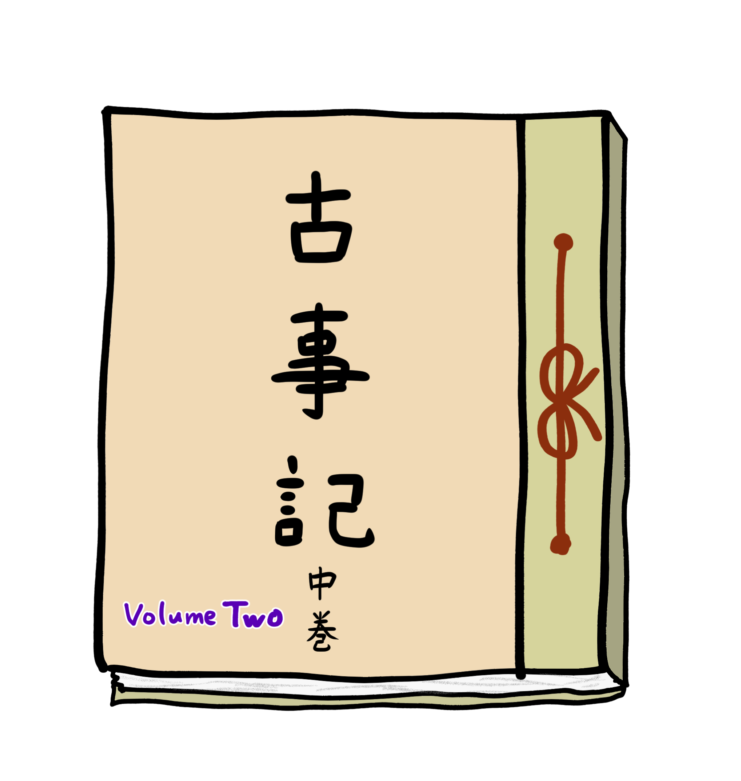
Volume 2
The History of the Emperors (1st to 15th)
From Emperor Jimmu, the first emperor, to Emperor Ōjin.
A historical record that also includes heroic tales and legends.
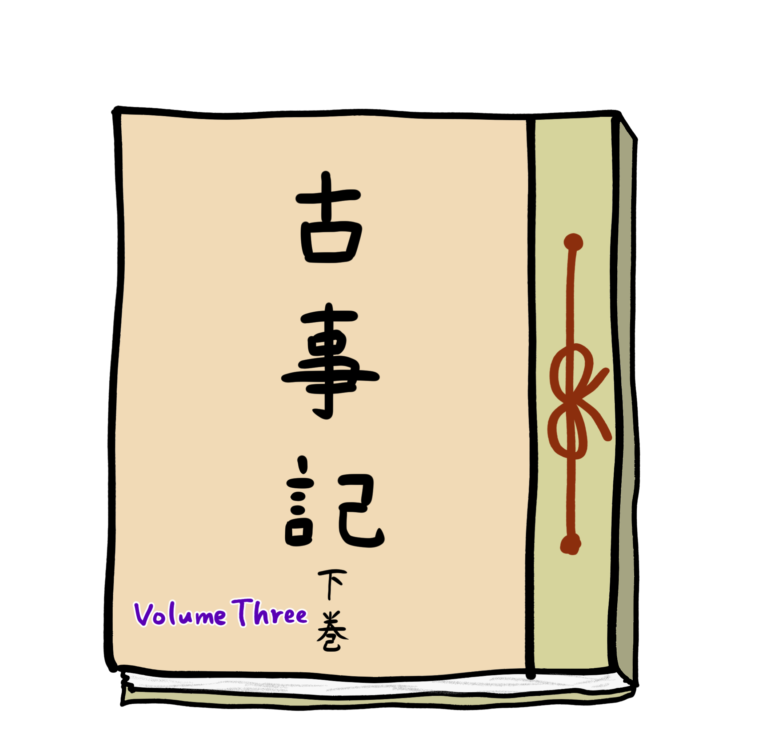
Volume 3
The History of the Emperors (16th to 33rd)
The history of the emperors from Emperor Nintoku(around the 4th century) to Emperor Suiko(~628 CE).
In other words, it records the history up to just before the compilation of the Kojiki in 712.
A Text Written in the Same Period
Nihon Shoki
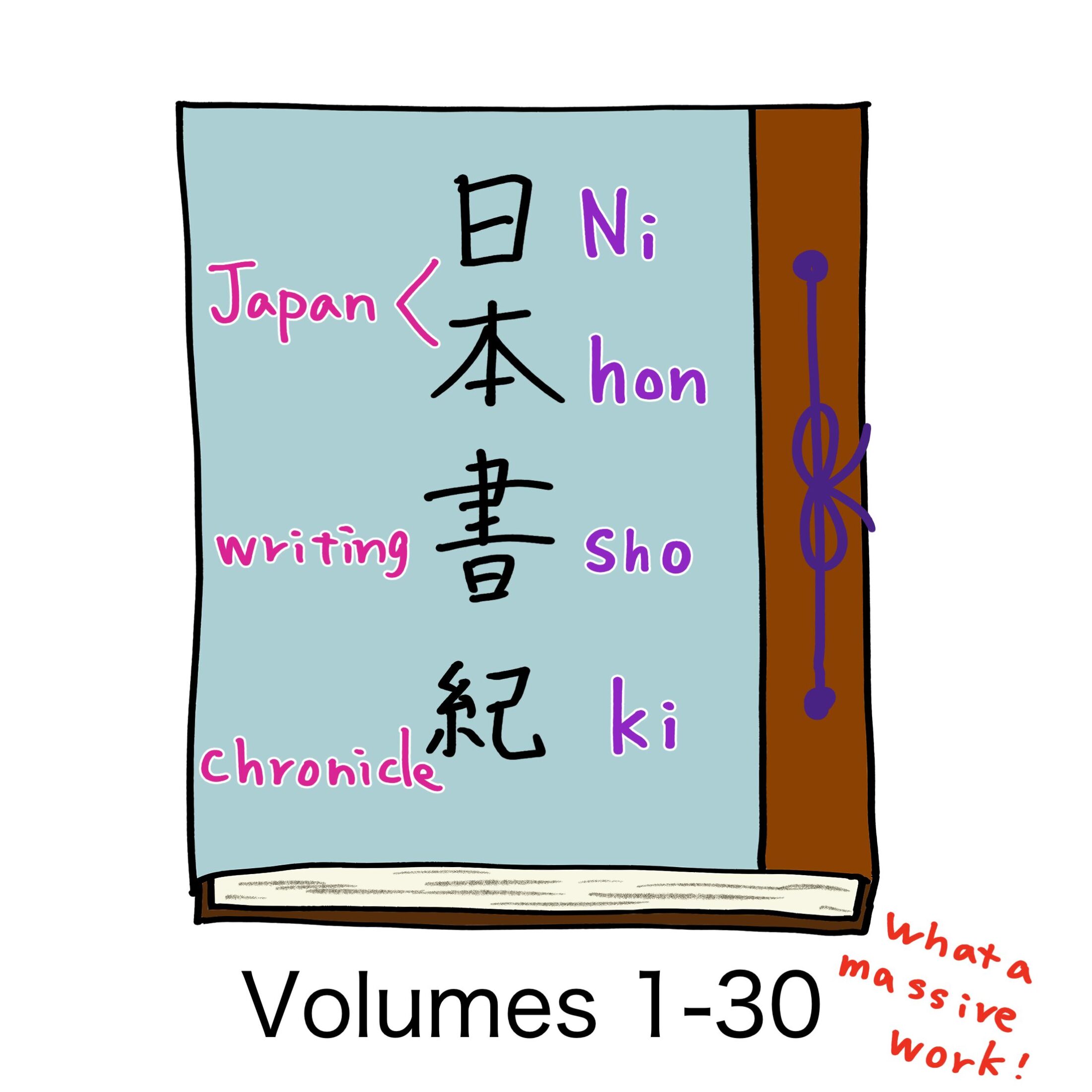
Nihon Shoki was completed in 720, eight years after the Kojiki in 712.
It consists of 30 volumes and records the history of Japan from the age of myth to the 41st emperor.
It was written in classical Chinese, the international language of East Asia at the time, and is considered Japan’s official history written for an international audience.
While the Kojiki can be read like a flowing narrative, the Nihon Shoki records events in a more formal and factual style.
For a single myth, it often includes multiple alternative traditions as annotations.
So even when the same myths or Kami appear in both the Kojiki and the Nihon Shoki, they may be presented with different aspects or personalities.
This site turns the Kojiki into manga, while also checking the matching passages in the Nihon Shoki along the way.
When the Nihon Shoki helps make something easier to understand, it is sometimes included with a note like, “According to the Nihon Shoki …”
About the Creator

Hello and welcome to my website!
I am Japanese, born and raised in Japan, and I still live here. I’m a woman in my early 40s with a deep love for mythology.
One of my favorite things is exploring the similarities between Japanese mythology and myths from around the world. I also enjoy visiting shrines across Japan to see how ancient stories and local legends come together.
I’m currently learning English, so please forgive me if some parts are still a bit awkward. Thank you so much for stopping by—I hope you enjoy your time here!
Tokura Kura 十暮 蔵 | Myth Guide 神話案内人
Q: Why I Started This Project?
A:
At first, I thought,
“I’m going to draw gag manga about Japanese Kami in English and post them online!”
But after drawing a few, I suddenly realized something very obvious:
“Wait… if someone doesn’t know Japanese mythology in the first place,
they probably won’t understand what’s funny about this at all…?!”
So I decided to start by turning all of the mythological sections of the Kojiki—Japan’s oldest historical record—into English manga and publishing them online.
Once I finish drawing the Kojiki myths,
I’d also like to introduce some famous Kami who appear outside the Kojiki.
After that, I want to start freely sharing my own original gag manga too!(Though that probably won’t be until around 2028 or so.)

Tokura Kura | Myth Guide (十暮 蔵)

Main References Used on This Website
- Ancient Texts: Kojiki and Nihonshoki
- Personal Research: Visiting shrines across Japan and studying local legends and mythology-related museums
- Norito: Sacred words and prayers recited at Shinto shrines
- Web Resources: Official websites such as the Jinja Honcho (Association of Shinto Shrines), which oversees Shinto shrines in Japan. →jinjahoncho.or.jp
- Reference for names: The database of Kokugakuin University.
(Kokugakuin University is highly specialized in Shinto studies. In Japan, there are only two universities where one can obtain the qualification to become a Shinto priest, and Kokugakuin is one of them.) → kojiki.kokugakuin.ac.jp - You can read a modern translation of the Kojiki on the official Kokugakuin University website, in both English and Japanese.→
https://kojiki.kokugakuin.ac.jp/kojiki/天地初発/
In addition, I have referenced numerous books, visual materials, and other sources. I would like to express my gratitude to all the authors and editors.
This project does not aim to promote or criticize any specific religion.
This site treats mythology as one cultural element among many.
It has no affiliation with any country, government, shrine, or official organization.
The content is part of a personal project by the creator, Tokura, based on knowledge personally accumulated over many years and closely aligned with texts such as the Kojiki, and expressed through an original approach and presentation.
The project places particular emphasis on carefully explaining concepts that may be difficult to understand, especially for readers unfamiliar with Japanese culture.