 JapanMyths
”Kami” is a Japanese word referring to gods, spirits, and sacred presences in Japanese belief. The unit used to count Kami is “Hashira.”
I just had to look!
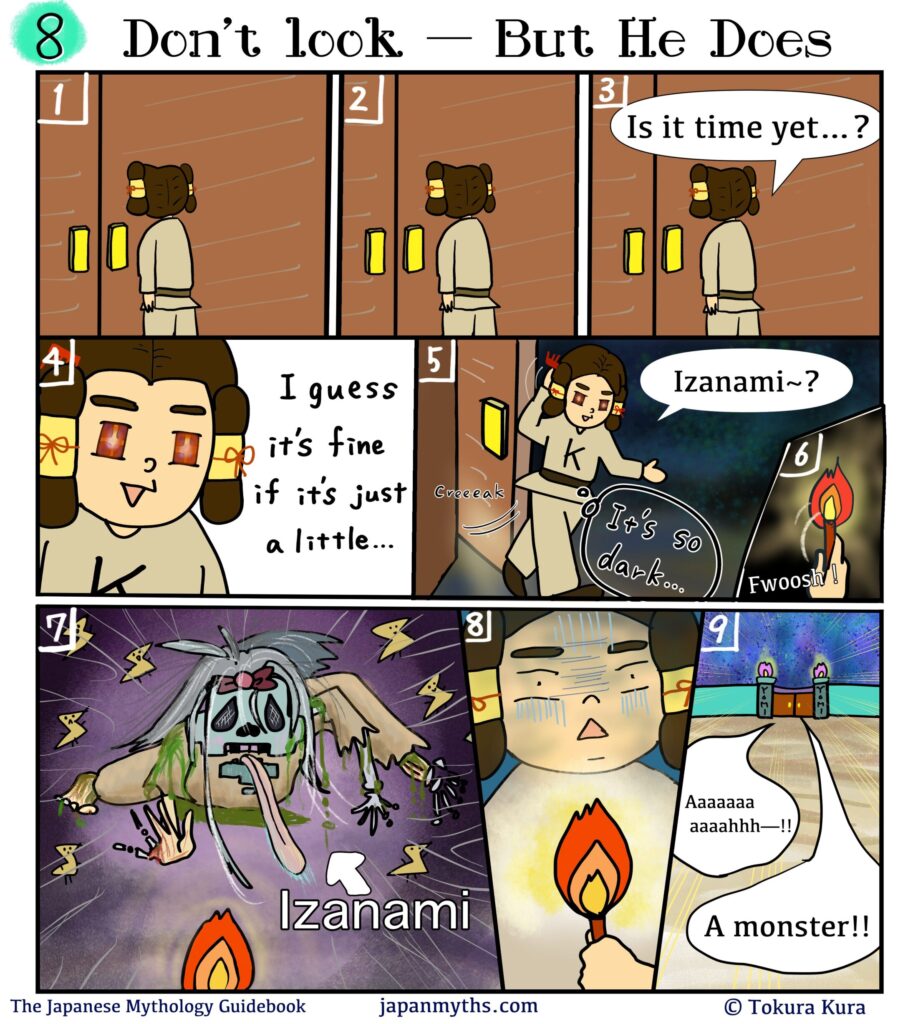
Izanami tells Izanaki “Do not look inside,” but Izanaki peeks
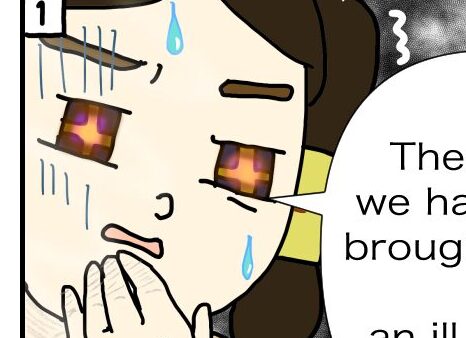
Izanami was deeply moved that Izanaki had gone all the way to the land of Yomi to bring her back. She said, “I will consult with the gods of the land of Yomi. While I do that, do not look inside, no matter what.” Izanaki agreed and waited. However, no matter how long he waited, there was no response from inside. Finally, unable to endure it any longer, Izanaki broke his promise to Izanami and went inside!
Because it was very dark, he broke one prong of the comb he had in his hair to light a fire.
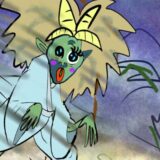
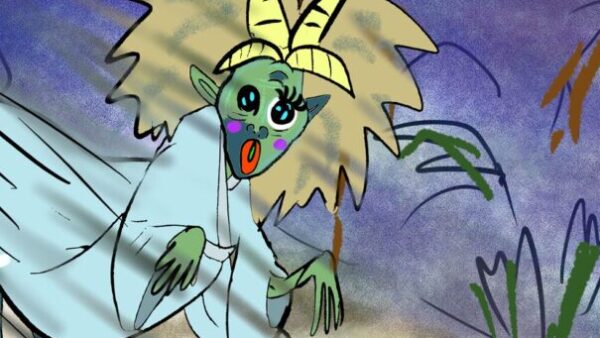
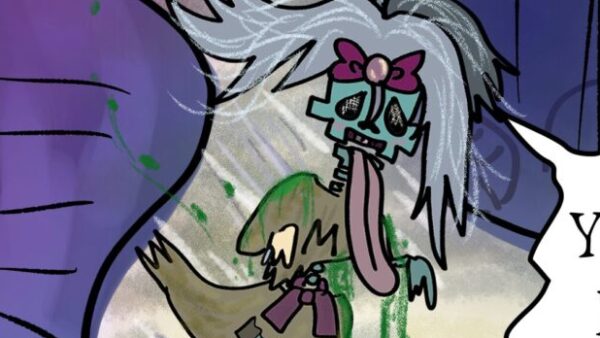
Izanami’s horrified form
What Izanaki saw was Izanami, in a decayed and unrecognizable form. Around her body were the eight thunder Kami (Yakusanoikazuchi), born from her corpse:
-Ōikazuchi (Great Thunder )
-Honoikazuchi (Fire Thunder)
-Kuroikazuchi (Black Thunder)
-Sakuikazuchi (Cleft Thunder)
-Wakaikazuchi (Young Thunder)
-Tsuchiikazuchi (Earth Thunder)
-Naruikazuchi (Sounding Thunder)
-Fusuikazuchi (Reposing Thunder)
According to the Kojiki, eight thunder Kami originated from distinct parts of Izanami’s body after her death.
Great Thunder manifested in the head, Fire Thunder in the chest, Black Thunder in the abdomen, and Cleft Thunder in the region of the genitals.
Young Thunder and Earth Thunder emerged at the left and right hands respectively, while Sounding Thunder and Reposing Thunder arose from the left and right legs.
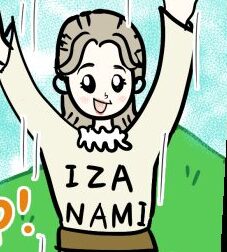
↓ Izanami Episodes
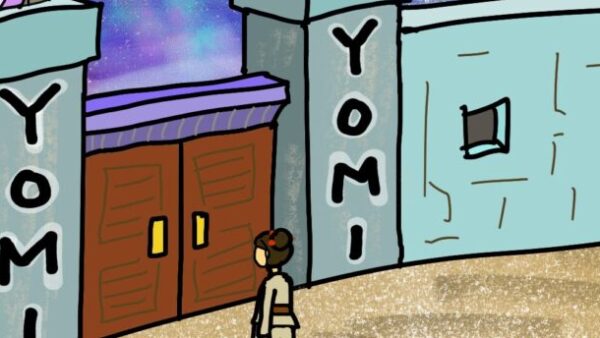
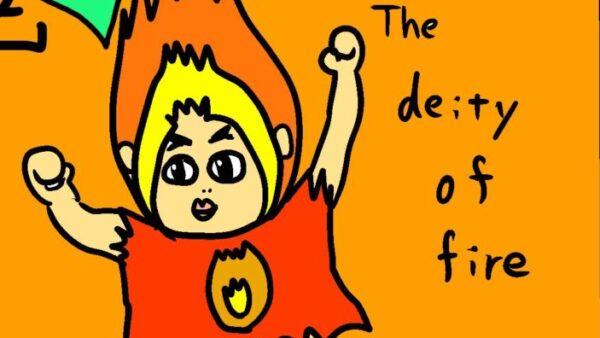
↓ Izanaki Episodes
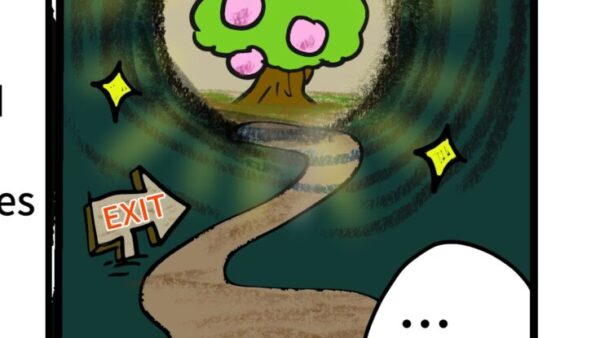
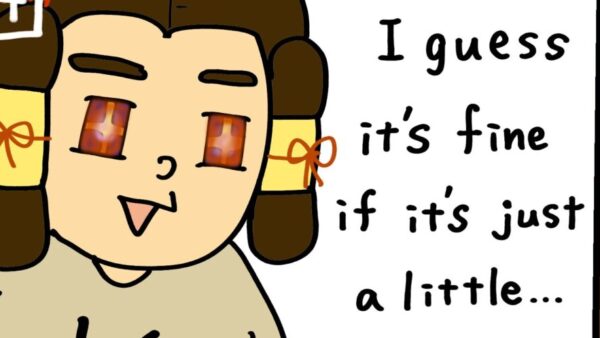
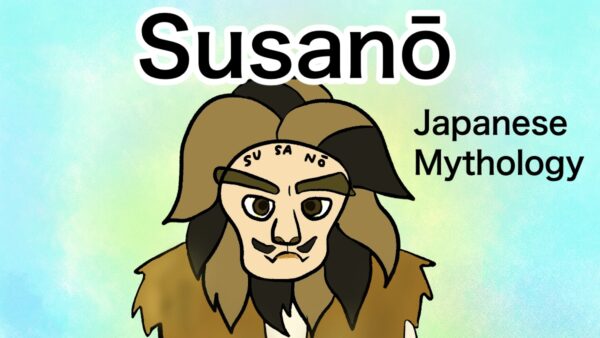
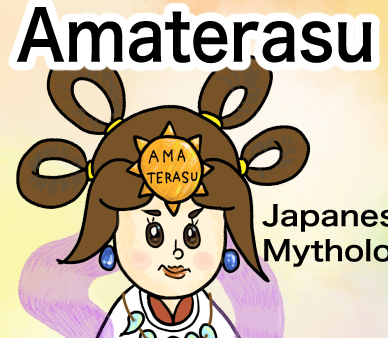
Kami on this site were character-designed and illustrated by Tokura Kura. Since the Kojiki contains no descriptions or illustrations of Kami’s physical appearances, they are depicted based on imagination.
This project does not aim to promote or criticize any specific religion.
It is not intended to serve as an academic, historical, or educational reference.
This site treats mythology as one cultural element among many.
It has no affiliation with any country, government, shrine, or official organization.
The content is part of a personal project by the creator, Tokura, based on knowledge personally accumulated over many years and closely aligned with texts such as the Kojiki, and expressed through an original approach and presentation.
The project places particular emphasis on carefully explaining concepts that may be difficult to understand, especially for readers unfamiliar with Japanese culture.