KOJIKI
Compiled in 712, this is the oldest official history book still in existence in Japan.
The original manuscript no longer exists. Only handwritten copies, some of which are designated as National Treasures, survive.
There were historical records older than the Kojiki, but they were destroyed in a fire.
Q:What is written in the Kojiki?
A:Myths, Legends of heroes, History (3 volumes)
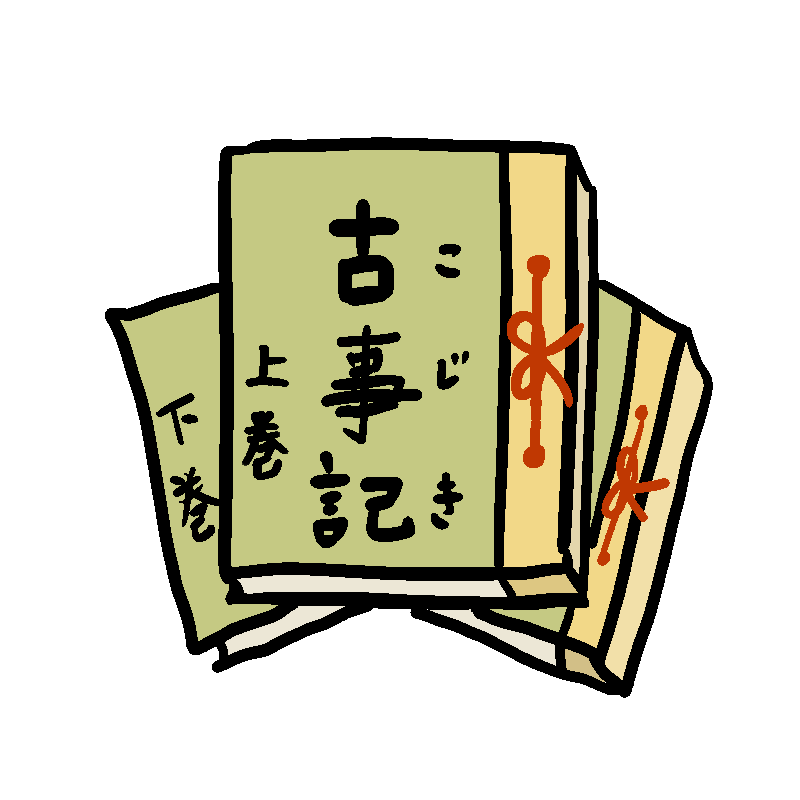
Volume I (Upper Volume)
This volume tells the story of Japan’s origins, from the creation of the universe to the birth of Emperor Jimmu, the first Emperor of Japan.
It contains the stories of the Kami—in other words, Japanese mythology.
This is the volume that has been adapted into a manga on this website!
Although there are other books that contain Japanese myths, when people refer to Japanese mythology, they are usually referring to the first volume of the Kojiki.
Volume II (Middle Volume)
This volume records the history from Emperor Jimmu, the first Emperor of Japan, to Emperor Ōjin.
It also contains heroic stories and other notable episodes.
Volume III (Lower Volume)
This volume records the history from Emperor Nintoku (around the 4th century) to Empress Suiko (around 628).
It covers the history leading up to the compilation of the Kojiki in 712.
Nihon Shoki
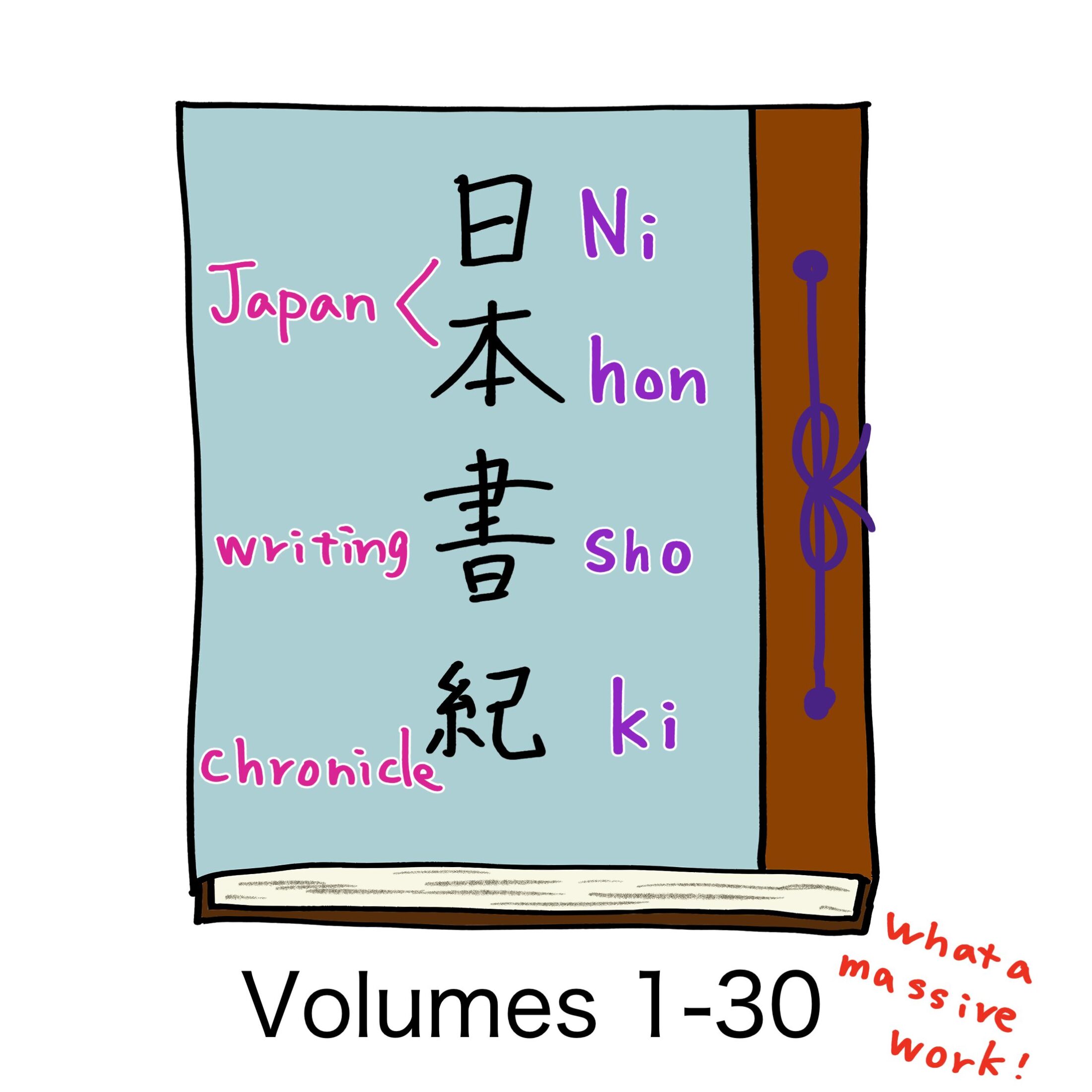
Nihon Shoki(30 volumes)
The Nihon Shoki is an official history of Japan, completed in 720, eight years after the Kojiki.
Consisting of 30 volumes, it records Japan’s history from the age of mythology to the reign of the 41st Emperor.
Unlike the Kojiki, it was written not in Japanese, but in Classical Chinese, the common written language of East Asia at the time. Another distinctive feature is that it quotes ancient Chinese historical texts. These characteristics suggest that it was intended not only for readers in Japan but also for an international audience.
The Nihon Shoki was an important national project that presented the historical legitimacy of Japan to the international community.
While the Kojiki can be read as a continuous narrative, the Nihon Shoki records events in a more formal and historical style.
In addition, many episodes are first presented as the main account, followed by one or more alternative accounts that preserve different traditions of the same event. This editorial approach reflects an effort to record multiple versions of myths and historical traditions, which often varied by region, rather than presenting only a single definitive story.
Q: Do the Kojiki and the Nihon Shoki contain the same stories?
A: Yes. They share most of the same major episodes and follow essentially the same overall storyline.
However, there are many differences in the details, even when the overall episodes are the same.
Some Kami appear only in the Nihon Shoki and not in the Kojiki. Likewise, some episodes are found in one book but not in the other.
Both the Kojiki and the Nihon Shoki share the same basic premise: they cover Japan’s history from the age of mythology to the reigns of the Emperors. Both are official historical records of Japan that cover the same period.
Summary
| Kojiki | Nihon Shoki | |
| Completed | 712 CE | 720 CE |
| Volumes | 3 volumes (Upper, Middle, Lower) | 30 volumes + 1 genealogy volume (now lost) |
| Compiled by | Hieda no Arei & Ōno Yasumaro | Prince Toneri |
| Language | Japanese (written using Classical Chinese characters) | Classical Chinese |
| Intended Audience | People within Japan (not intended for a general audience) | International audience (especially China and Korea) |
| Contents | Japanese mythology to the history of the emperors | Japanese mythology to the history of the emperors |
| Style | A single, dramatic narrative (one tradition adopted) | Multiple traditions presented in chronological order (including alternative versions) |
| Commissioned by | Emperor Tenmu (40th Emperor) | Emperor Tenmu (40th Emperor) |
| Purpose | To unify the various traditions and historical views passed down by different noble families | To establish Japan’s official history |
| Modern Perspective | An engaging story to read | A valuable historical resource for research |
On this website, we adapt the Kojiki into manga while also consulting the corresponding passages in the Nihon Shoki.
When the Kojiki alone does not provide enough background to fully understand a story, we may include notes such as, “According to the Nihon Shoki…” to provide additional context.
Our goal is to create a website where even readers who are unfamiliar with Japanese culture can enjoy and better understand the rich world of Japanese mythology.