Susanō Declares Victory
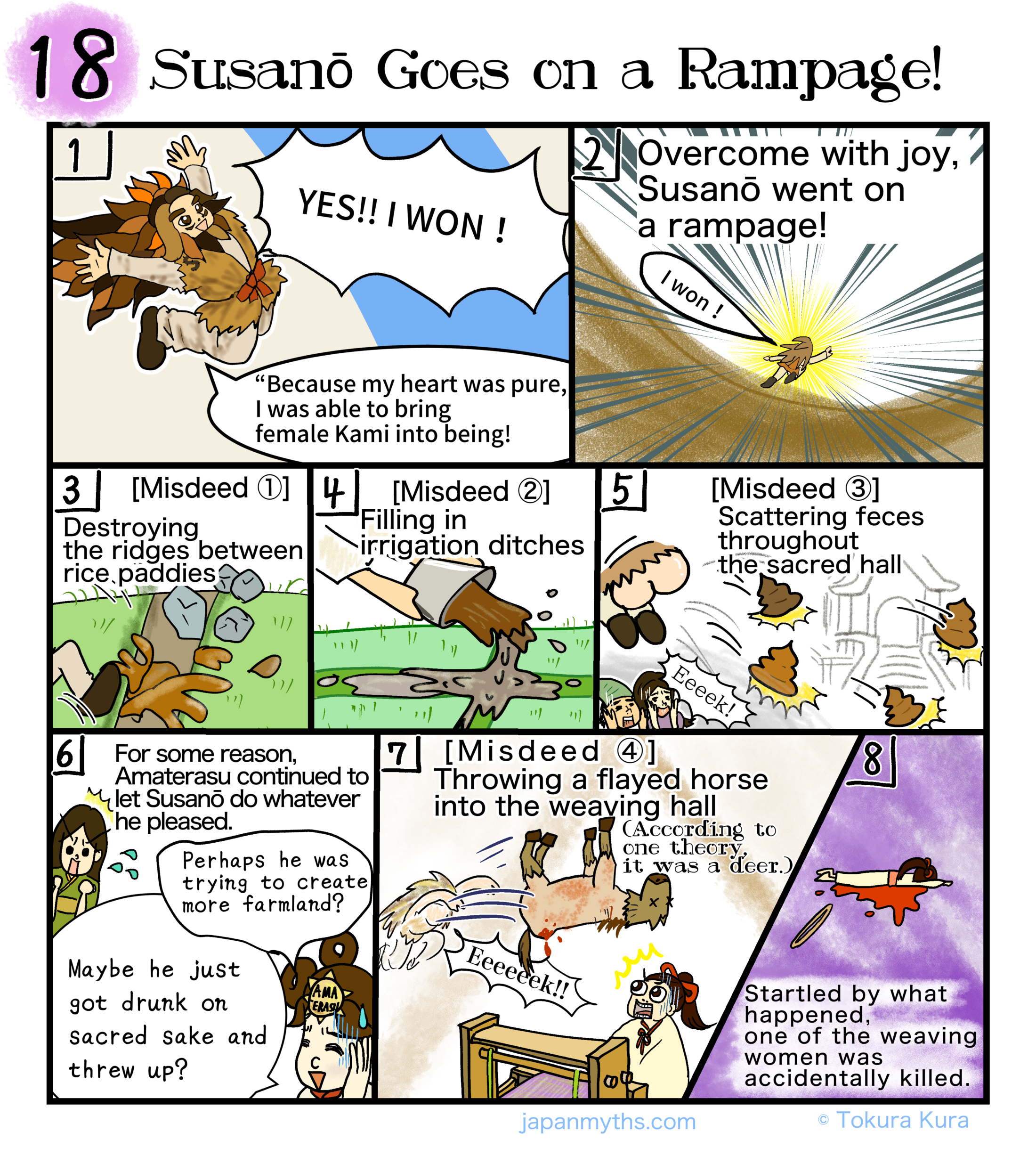
Susanō declares, “I gave birth to female Kami, so I win!”
In the Kojiki, the Ukei begins without establishing any criteria for what result would determine the winner. Therefore, the story portrays Susanō as simply declaring himself the winner.
Susanō Goes on a Rampage!
[Misdeed ①] Destroying the ridges between rice paddies
[Misdeed ②] Filling in irrigation ditches
Both of these acts disrupted farming.
[Misdeed ③] Scattering feces throughout a sacred hall
This was the sacred hall where Amaterasu no Ōmikami would eat newly harvested grain and offer it to the Kami during an important ritual.
This ritual has continued from ancient times to the present day. Known as the Niiname, it involves offering newly harvested rice, wheat, and other grains to the Kami. It is one of the most important ceremonies performed by the Imperial Court.
The ceremony is held every year on November 23, which is now the national holiday known as Labor Thanksgiving Day. Until 1948, the holiday was called Niinamesai.
Amaterasu Defends Susanō
Instead of becoming angry with Susanō for going on a rampage, Amaterasu makes excuses for him.
As shown in the manga, the Kojiki describes her defending him with explanations such as:
“Perhaps he thought it would be a waste of good farmland.”
“It may look like feces, but perhaps he became drunk and vomited.”
The Death of the Weaving Woman
[Misdeed ④]
Susanō opened a hole in the roof of the weaving hall and threw in Ame-no-Fuchikoma, a heavenly piebald horse whose hide had been flayed backward.
One of the weaving women was so startled that a long, narrow weaving tool called a shuttle pierced her body, killing her.

This is one of the most shocking episodes in the Kojiki.
When I tried to explore it in depth, the explanation became unbelievably long—so I decided to cut it all and keep this commentary casual instead.